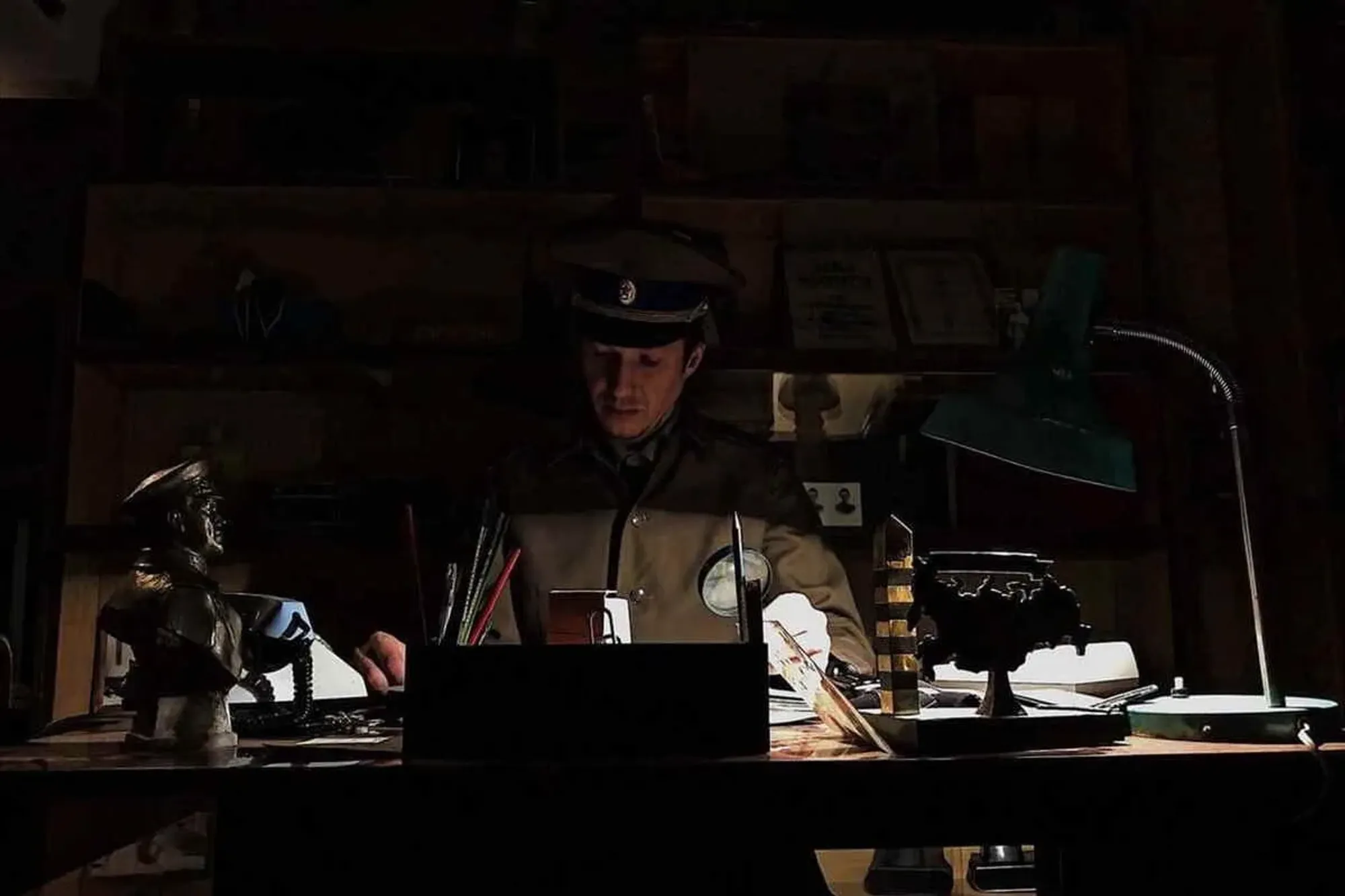
KGB Headquarters
- Instant booking
- 2–7Players
- 70 minutesTime
- Above average. More puzzles and a faster pace. Tight for beginners.Difficulty
- Not scary. Almost no tension.Scariness
Polished furniture, portraits of Lenin and Khrushchev on the walls, and shelves full of books about the war. The air is filled with the scent of strong tobacco mixed with the pungent smell of gunpowder. A military tunic is carelessly thrown onto a chair. Its owner is meticulously writing something on paper at a table. He then loads a pistol, opens his hiding place, and carefully places the weapon with the note inside. Before this, he performs many strange manipulations. The colonel does not want his secret to be revealed after his death. Your task is to unravel the mystery that the military man has been hiding for many years.
Для подтверждения бронирования требуется предоплата в размере 1000 рублей. При отмене игры менее чем за сутки предоплата не возвращается.
Online booking
The owner of this escape room has not yet confirmed their details.
If you are the owner of this escape room, please confirm your details so that customers can see your contact information for bookings.Location
AI Overview
Other escape rooms at this location
Escape rooms in Tyumen by category
Pick a vibe — every category is a real page with reviews and booking.
Reviews