Escape room 12+
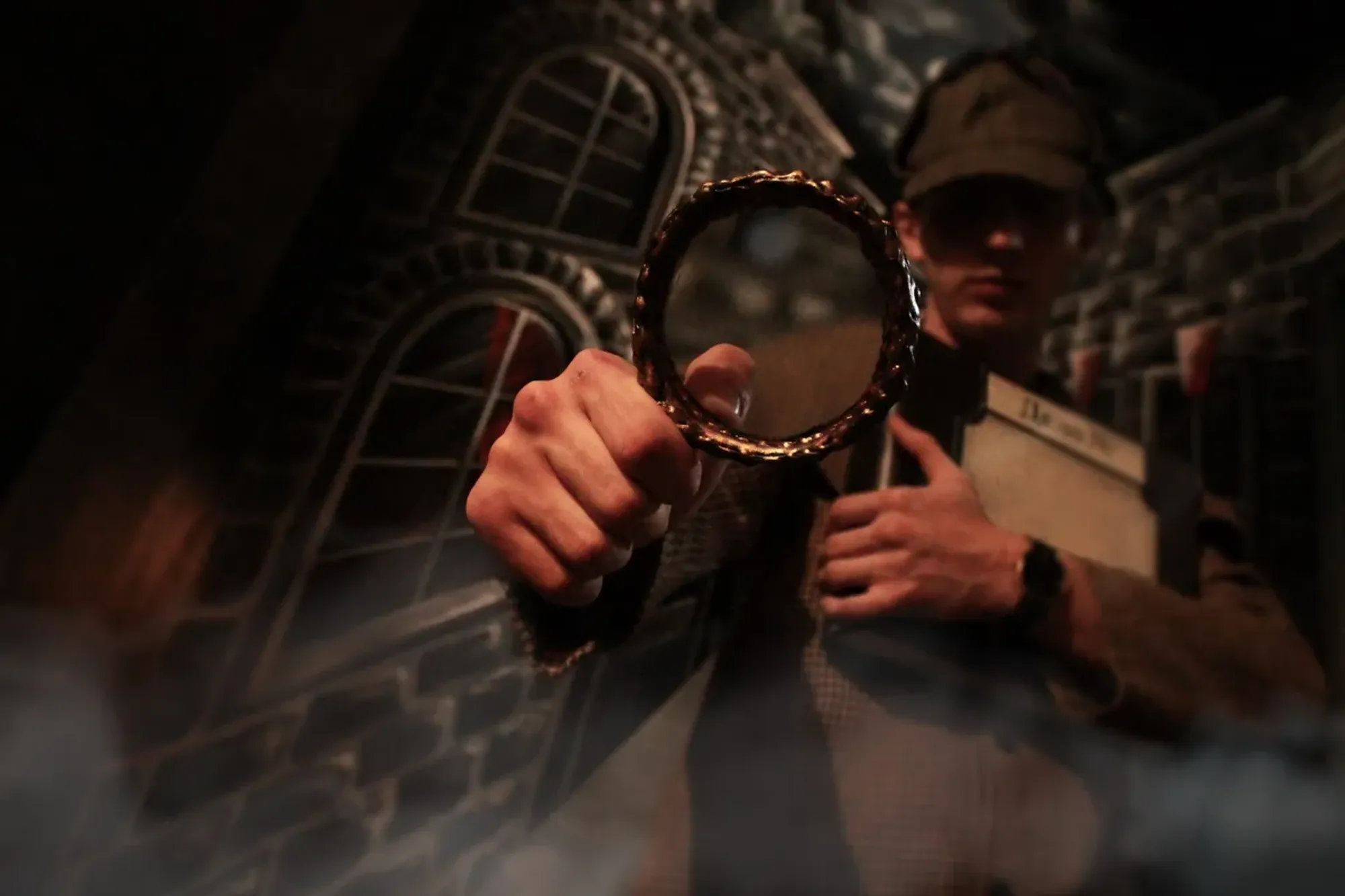
Sherlock Holmes
- 1–8Players
- 60 minutesTime
- Difficult. Dense puzzles. Better with some experience.Difficulty
- Not scary. Almost no tension.Scariness
About the escape room
The police station is mined, and nobody even knows about it? A grand crime! And it is you who will have to take on the role of the greatest detective and stop Moriarty.
Important information and features of the escape room
На игры с 20:30 обязательна предоплата в размере 1000 рублей. Предоплата возвращается при отмене бронирования не позднее чем за 48 часов до игры.
The owner of this escape room has not yet confirmed their details.
If you are the owner of this escape room, please confirm your details so that customers can see your contact information for bookings.Location
рядом с ТЦ «Гринвич», вход с ул. Куйбышева
Services are provided by ИП Белоногов А.Ф.
Wifi
Wardrobe
Waiting Area
AI Overview
AIPlayers praise the ambience, the number and logic of puzzles, note linear progression and a smooth story. Technical remarks repeat: mechanisms sometimes trigger with delay, sound and voice messages are often quiet. Hints are at times given without request, there’s a sense of rush because there’s a lot to do in an hour. Six people — cramped and part of the team idles, 3–4 is optimal.
WeaknessesPeriodic delays and “temperamental” mechanisms, weak audibility of the narrator and hints. At times intrusive hints and time pressure due to the volume of tasks. Service is inconsistent: sometimes a warm welcome, sometimes confusion with hints or guest reception.
StrengthsQuality set design and immersion in a London police station. Many different tasks for logic and attention, everything fits into a clear chain. Neat automation and interesting transitions between locations.
SecurityA briefing is held before start, physical load is minimal, movement is safe. Rare remarks — somewhat cramped in places and sometimes stuffy, but no critical safety complaints.
Level of fearNot scary and with no horror effects, suitable for children and mixed teams. Reviews say it’s comfortable for ages 7–10 with adults; teens and adults are interested too.
Actors' gameNo actor accompaniment as such; interaction goes through the administrator and an audio storyline. Reports vary: some thank for delicate hints, others scold “hinting” without request and inattention to the current stage.
Quality of riddlesThere are lots of puzzles, they’re diverse and mostly fair and logical; no special knowledge required. Progression is linear: do one — the next opens, so it’s hard to parallelize tasks. There are electronic elements and a couple of dexterity tasks not everyone likes; sometimes triggers don’t fire right away.
PlotYou are a team that must expose Moriarty and defuse the station. The story is delivered sequentially, without spoilers, helping maintain the pace of the investigation.
Difficulty levelDifficulty leans toward medium: comfortable for beginners with hints, interesting for experienced players thanks to the number of tasks. Optimal team is 2–4 people; with six it can be cramped and less engaging.
Other escape rooms at this location
Sherlock Holmes1 - 8 people
Escape rooms in Yekaterinburg by category
Pick a vibe — every category is a real page with reviews and booking.
Reviews