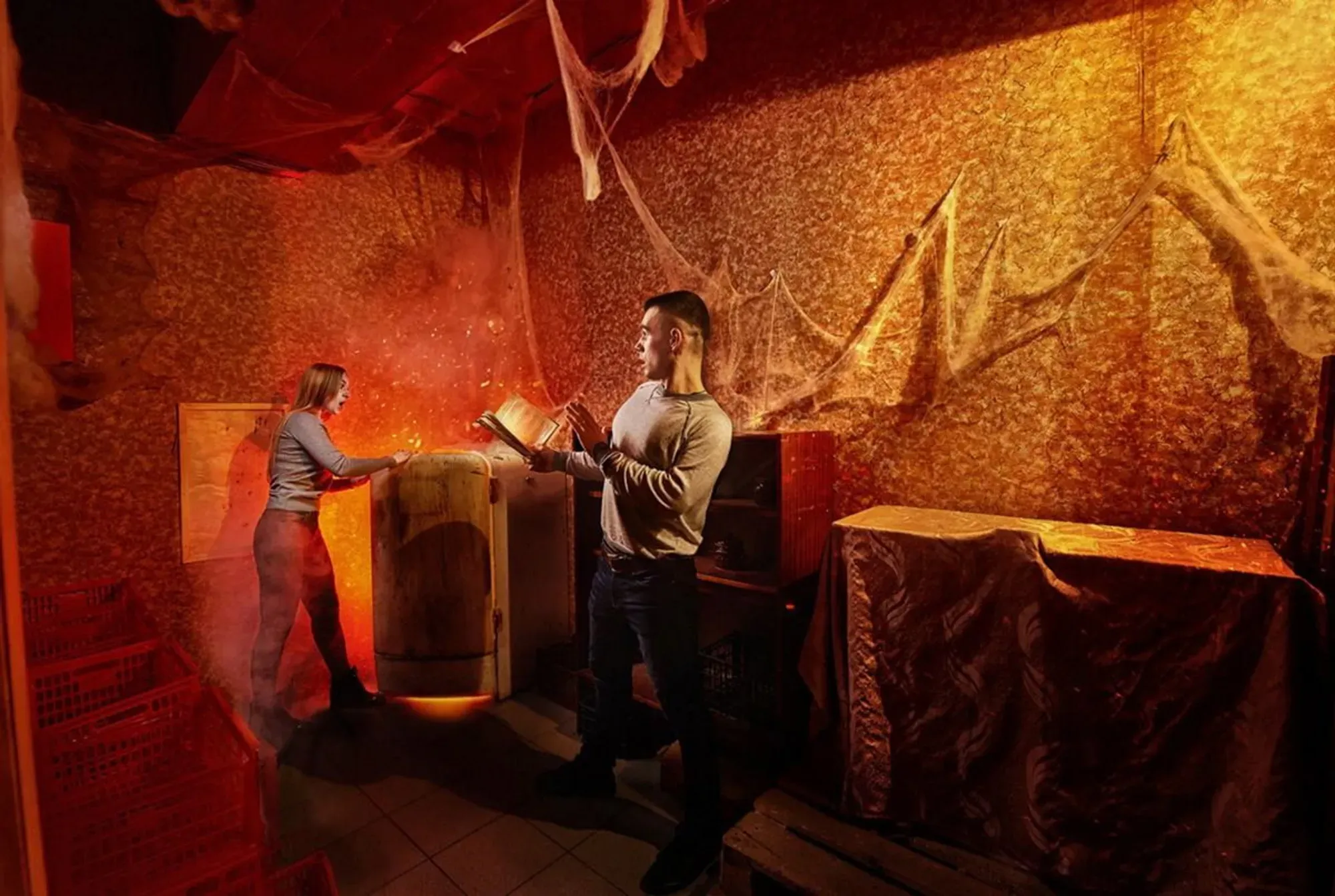
Escape room 12+
"Blood Mary" Bar
- Instant booking
- 2–6Players
- 60 minutesTime
- Above average. More puzzles and a faster pace. Tight for beginners.Difficulty
- A bit scary. Jump scares and dark scenes.Scariness
About the escape room
What a strange establishment! Where are the waiters and visitors? What are these incomprehensible signs on the floor? Who locked all the doors? And why did the locals whisper to us: "Beware of her, this bar - a doomed place..."
Important information and features of the escape room
На все сеансы требуется обязательная предоплата в размере 500 рублей. Сумма предоплаты не возвращается при отмене бронирования позднее чем за 2 часа до игры.
Online booking
The owner of this escape room has not yet confirmed their details.
If you are the owner of this escape room, please confirm your details so that customers can see your contact information for bookings.Location
Слева от центрального входа спуск на цоколь
Services are provided by ИП Савицкий И.В. (860226087324)
Free Parking
Wardrobe
Waiting Area
AI Overview
AIMost praise the bar’s atmosphere and the actor’s performance: the actor appears unexpectedly, sometimes in different guises, and keeps you on edge for the whole hour. There are many puzzles, logical and varied, with a good balance of electronics and locks. Fear levels range from “moderate” to “very scary,” plus there are contact/non-contact modes. Critiques include the compact space and moments of searching in the dark; lighting and safety during sudden scares are occasionally noted.
WeaknessesSome guests consider it more a scare-focused performance than a brain-teaser. Parts of the venue are tight; there are comments about lighting and the risk of collisions during panic. Occasionally, the front-desk welcome feels cold.
StrengthsStrong atmosphere and set design, immersion from the doorstep. Live acting with surprise appearances and interactivity. Lots of non-trivial, logical tasks and an impactful finale.
SecurityYou get a briefing beforehand and staff monitor the game, but sudden scares in tight areas can cause collisions. It’s more comfortable to go in a small team and move carefully in the dark.
Level of fearFear is wide-ranging and adjustable: from non-contact to contact format. Suitable for teens 13–15, but better with adults and without overly large teams.
Actors' gameThe actor works subtly and unpredictably, sometimes changes roles, and is woven into the puzzles as a dynamic element. Even in non-contact mode, the actor scares effectively without overacting.
Quality of riddlesThere are many puzzles—logical and diverse: purposeful searching, ciphers, tech, and classic locks. Overall fair and sequential, though some teams want more “intellectual heft,” and there’s occasional extra information. The pace ramps up toward the finale, which also has plenty to do.
PlotThe story of the mystical bar unfolds as you go: locked doors, floor markings, whispers about Mary, and vanished patrons come together into a coherent legend. No spoilers: there are a couple of unexpected twists toward the end.
Difficulty levelMedium difficulty: hints help newcomers, experienced players will move briskly. Typical runtime is 45–60 minutes, with a couple of attention-based hiccups.
Other escape rooms at this location
"Blood Mary" Bar2 - 6 people
Escape rooms in Omsk by category
Pick a vibe — every category is a real page with reviews and booking.
Reviews