Escape room 6+
Space. Kids
- 2–8Players
- 60 minutesTime
- Easy. A few easy tasks. Good for a first visit.Difficulty
- Not scary. Almost no tension.Scariness
About the escape room
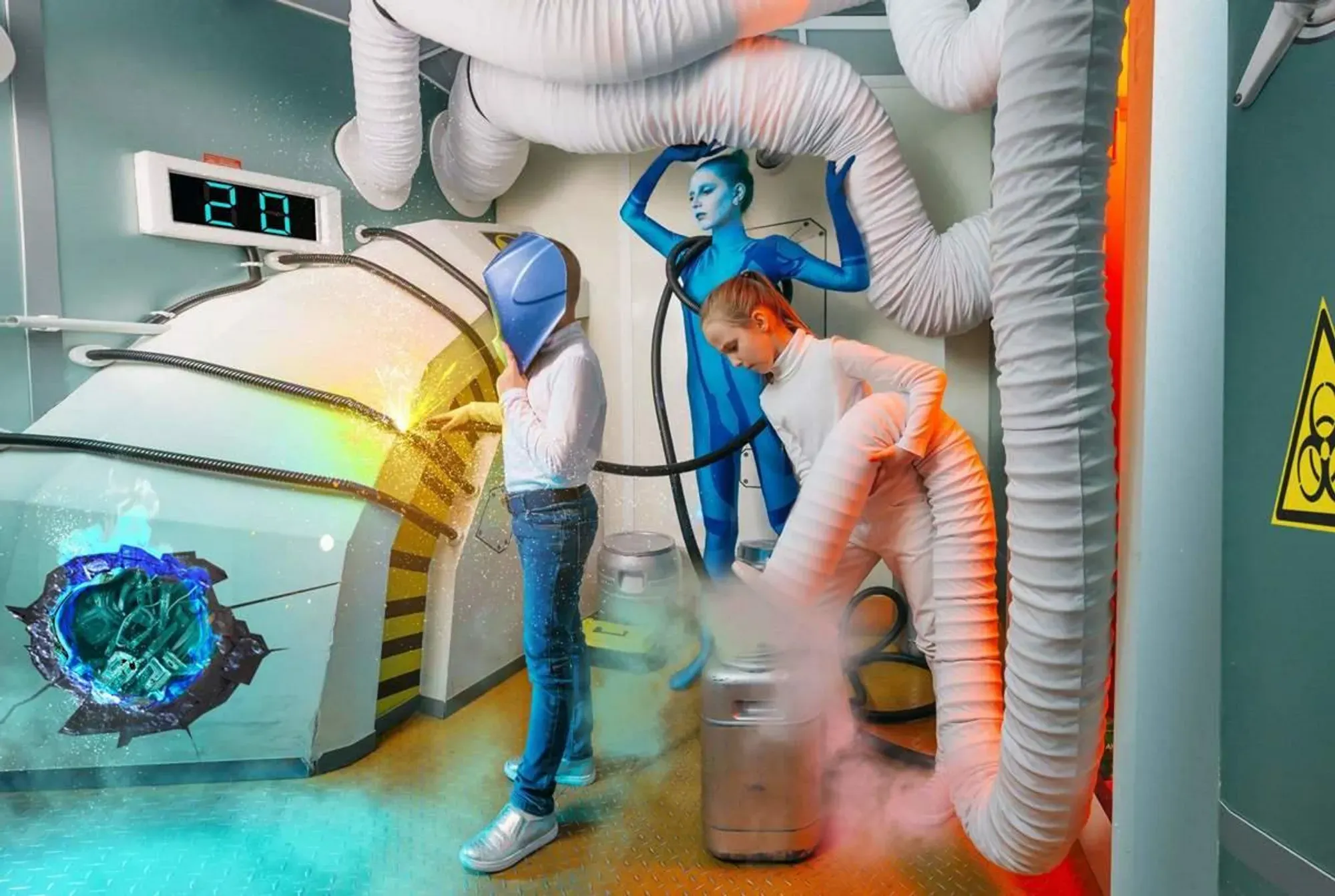
As the most gifted children, you were chosen to fly to the distant star Aldebaran and find out if there are forms of life there. Since the flight is very long, you sleep peacefully in hibernation.
Suddenly you wake up from the activation of emergency mode. Something on the ship has broken, seemingly from a powerful collision, and now your mission may not happen. But you have an hour to fix the ship and still make it to the star, successfully completing what you were chosen for.
Important information and features of the escape room
Дети 6-11 лет могут пройти квест в сопровождении взрослых или аниматора. Услуга аниматора – 1000 рублей.
The owner of this escape room has not yet confirmed their details.
If you are the owner of this escape room, please confirm your details so that customers can see your contact information for bookings.Location
Минута пешком от остановки «Комсомольская улица», вход со двора
Services are provided by ИП Ходырев С.Г.
Free Parking
Wifi
Wardrobe
Waiting Area
AI Overview
AIMost praise the scale and realism of the ship, the many locations, and the rich ‘flight’ atmosphere. The puzzles are generally logical and varied, but younger teams often need help from an adult or host. Scares are minimal, though loud sounds at the start can bother sensitive kids. Technical hiccups and mix-ups with the guest/tea room are mentioned occasionally.
WeaknessesFor ages 6–8, some tasks are tough without hints, and the finale can spike in difficulty. Loud sounds can be frightening at times. Rare organizational hiccups and tired props, like a finicky fingerprint lock.
StrengthsThe set feels like a real spacecraft; the flight and turbine effects go down well with all ages. Plenty of rooms and tasks so everyone can find ‘their’ role. The team is friendly: hints are gentle and timely, and a photo souvenir is a nice bonus.
SecurityA clear briefing is given before the start; a host accompanies you and keeps the pace. The space is large and safe; if kids are sensitive to loud effects, it’s worth flagging in advance and taking hints more readily.
Level of fearThis is a kids’ version without hardcore scares: more drive and light suspense than fear. In the first minutes, sound and darkness may startle sensitive children, but with a host the anxiety fades quickly.
Actors' gameHosts and administrators are a strong suit: friendly, they catch the moment and give unobtrusive hints. Where needed, they calm and involve the kids without solving everything for them.
Quality of riddlesPuzzles are fair and diverse: from code searches to logic and a bit of math; attention to detail matters. Most families are comfortable with occasional hints, while the very young struggle without an adult. The final task is often noticeably harder than the rest.
PlotYou are young astronauts on your way to Aldebaran when emergency mode wakes the crew. You have an hour to repair the ship and see the mission through.
Difficulty levelActual difficulty leans light–medium: optimal for ages 8–11 and families; younger kids do better with a host or active hints. Teens are fine without help; a few tasks and the finale can even surprise adults.
Other escape rooms at this location
Space. Kids2 - 8 people
Escape rooms in Yekaterinburg by category
Pick a vibe — every category is a real page with reviews and booking.
Reviews