Escape room 12+
You can't escape!
- Instant booking
- Live actors
- 2–8Players
- 90 minutesTime
- Difficult. Dense puzzles. Better with some experience.Difficulty
- Scary. Actors, sudden appearances, psychological pressure.Scariness
About the escape room
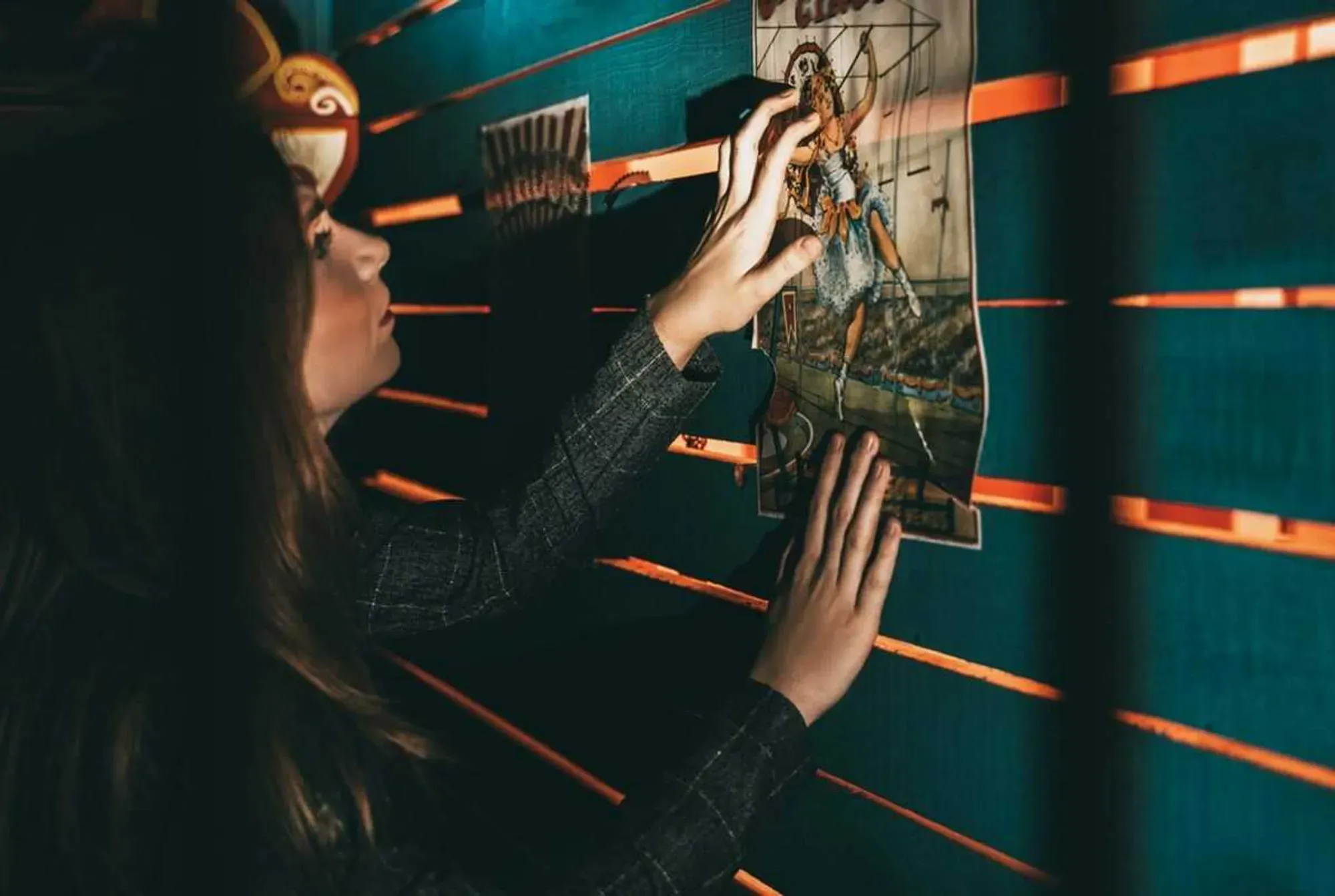
For the past few months, people have been disappearing in your town. Before they vanished, they were all seen at a performance by a wandering circus, which set up its tent in a wasteland behind an old mansion. You decide to conduct your own investigation and hide among the circus props. Your suspicions are confirmed: a horrific abduction takes place right before your eyes. You decide to follow the kidnapper and find out who they are. The abandoned house, the staircase, a blow... and now you find yourself here.
Important information and features of the escape room
Для подтверждения бронирования требуется предоплата в размере 1000 рублей. При отмене игры менее чем за сутки предоплата не возвращается.
Online booking
The owner of this escape room has not yet confirmed their details.
If you are the owner of this escape room, please confirm your details so that customers can see your contact information for bookings.Location
остановка «Школа № 9», цокольный этаж
Services are provided by ИП Кычаков А.С.
Free Parking
Wifi
Wardrobe
Waiting Area
AI Overview
AIMost praise the ambience, sound, and well-designed transitions between locations; staff are polite and adjust to the preferred fear level. Best team size is 3–5; larger groups often idle. Actor impressions vary by shift and team request: from “on fire” to “barely showed up.” Cons include a contentious final puzzle, occasional breakdowns, and pushy hints; scheduling hiccups happen.
WeaknessesAt times the actor appears rarely or scares weakly; there are breakdowns and questionable logic links, especially at the end. Hints can be pushed too aggressively; it feels cramped for 7–8 players and not everyone has enough to do. Some isolated complaints about service and scheduling.
StrengthsPowerful atmosphere and detailed sets, quality sound and lighting. Unconventional mechanisms and striking transitions, with memorable split-party moments. Staff flexibly tailors the run to the team.
SecurityBriefing is clear, staff generally attentive. Expect dark and tight sections, a safe foam-pit drop, and active mechanisms — listen to the host; occasional notes of minor scrapes like a splinter or fragile bulb.
Level of fearFear level ranges from medium to high: lots of darkness, tension, and sudden moments. Recommended 14+; the sensitive should request a softer mode or no actor; consider carefully if you’re claustrophobic.
Actors' gameThe actor is often praised for voice, timing, and non-contact scares, but interaction intensity fluctuates session to session. Versions with and without an actor are available; fear can be toned down on request.
Quality of riddlesPuzzles are varied, focused on mechanics and observation; generally logical and solvable with light-handed hints. The final task raises questions for some teams; occasional inconsistencies and rare malfunctions. Best balance is in teams of 3–5.
PlotA plot about disappearances and a traveling circus leads to an abandoned house and a few spoiler-free twists. Some miss a clearer resolution and stronger links between scenes.
Difficulty levelDifficulty is medium to above: newcomers will need a couple of hints; veterans will enjoy the mechanics but may find the task density light in places. Larger groups struggle to keep everyone engaged.
Other escape rooms at this location
You can't escape!2 - 8 people
Escape rooms in Tyumen by category
Pick a vibe — every category is a real page with reviews and booking.
Reviews