Escape room 14+
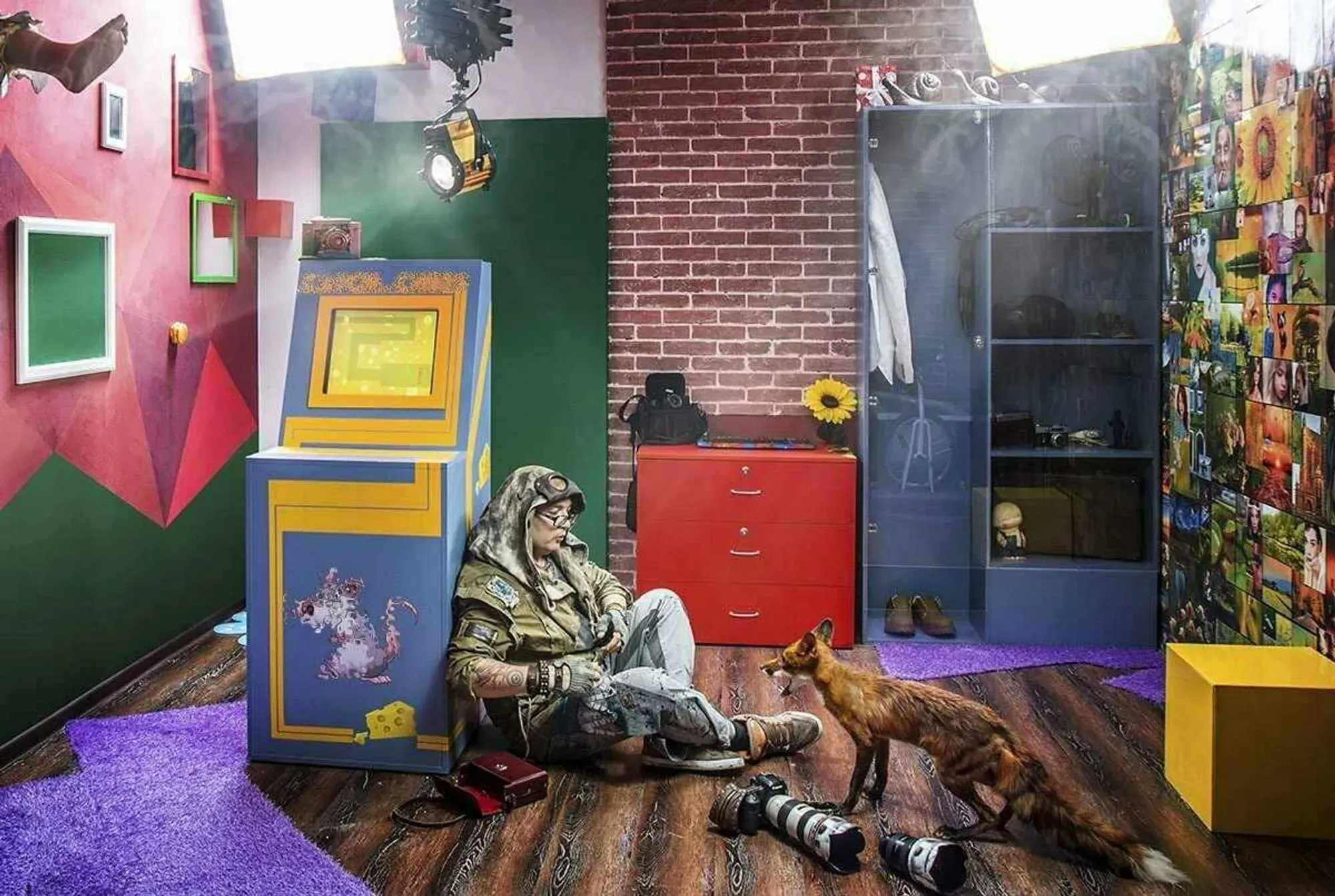
Crazy photographer
- 2–6Players
- 60 minutesTime
- Difficult. Dense puzzles. Better with some experience.Difficulty
- Not scary. Almost no tension.Scariness
About the escape room
You are a group of researchers, and your thirst for adventure led you to the Imaginarium photographer's lab. Once, he invented a mechanism that was embedded in the camera flash and helped to get rid of bad memories. During the development process, the photographer constantly tested it on himself, until he went crazy from these memory experiments. And now the flashes are absorbing even happy moments. Stop the mechanism as soon as possible, otherwise you risk forgetting what is dear to you.
Important information and features of the escape room
Требуется предоплата на ночные сеансы (22:20, 23:55) в размере 500 рублей.
The owner of this escape room has not yet confirmed their details.
If you are the owner of this escape room, please confirm your details so that customers can see your contact information for bookings.Location
ориентир – ТРК «Парк Хаус», вход со стороны медицинского центра «Шанс», вход на цокольный этаж
Services are provided by ИП Елизаров И.В.
Free Parking
Wifi
Wardrobe
Waiting Area
AI Overview
AIMost praise the colorful set, the variety and number of tasks, and attentive operators who step in right on time. Above‑average difficulty and a non‑linear flow are recurring themes; because of that, beginners sometimes get lost and take hints. There are comments about a small number of rooms and some tired mechanisms. Overall the impression is very positive: the quest sticks in memory and delivers tons of emotions.
WeaknessesAt times the number of locations feels limited and the non‑linear layout can be confusing. Technical hiccups and signs of wear appear, so some mechanisms don’t trigger on the first try. Some noted a muddled finale and expected “crazier” tasks.
StrengthsBold visuals and a cohesive “photo lab” theme hook you from the start. There are many puzzles—diverse, logical, often using interesting tech—with great team synergy. The staff are extremely attentive and friendly, keep you engaged, and help when it counts.
SecurityThere’s a briefing before the game, and the venue is clean and tidy. Staff monitor closely and help promptly, though occasionally some props feel worn.
Level of fearNot scary; suitable for families and kids, with reports of guests as young as 8. There can be tense moments, but no horror.
Actors' gameLively, attentive hosts keep the pace and give gentle, timely hints. Some stay in character and add immersion without being intrusive.
Quality of riddlesPuzzles are varied—logic, observation, tech, and team elements; there are many, and they’re fair to solve. The quest is non‑linear, so role distribution and communication help a lot. The difficulty is palpable, but solutions follow clear logic.
PlotYou’re in a mad photographer’s lab, trying to stop a memory‑wiping machine. The story is conveyed through the tasks and set, sustaining an “imaginarium” vibe.
Difficulty levelDifficulty is above average; beginners are better off in a team of 4–5 and shouldn’t hesitate to take hints. Experienced players will enjoy a dense, dynamic quest with lots of tasks.
Other escape rooms at this location
Crazy photographer2 - 6 people
Escape rooms in Yekaterinburg by category
Pick a vibe — every category is a real page with reviews and booking.
Reviews