Performance 16+
Vampire
- Live actors
- 2–8Players
- 60 minutesTime
- Medium. Logic and teamwork. No special experience needed.Difficulty
- A bit scary. Jump scares and dark scenes.Scariness
About the escape room
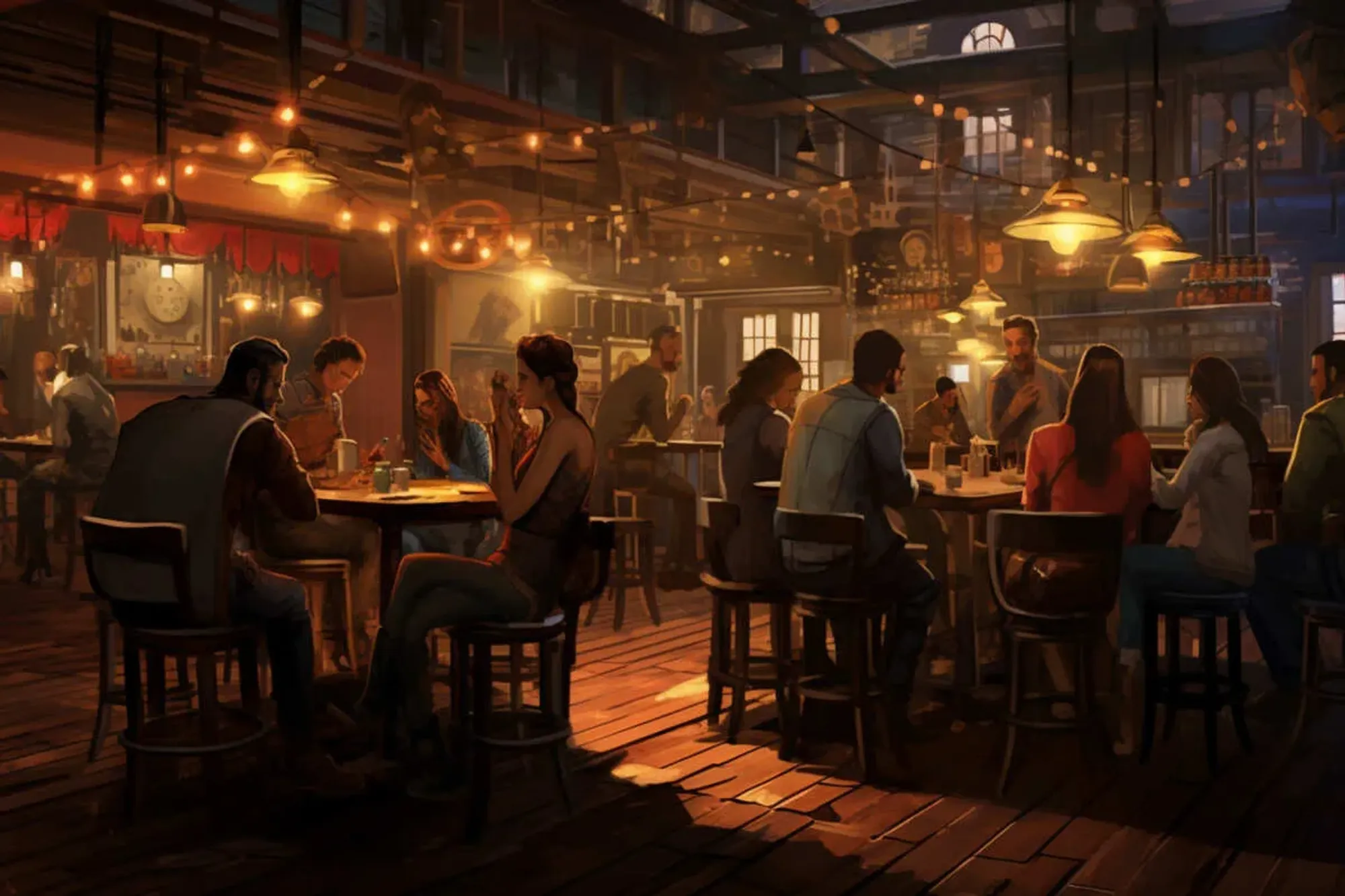
Mexico, outskirts of Mexico City, December 13, 1993. You and your friends decided to celebrate your birthday. The only bar that operates at night - "Blue Whale". Rumors go around that the bar building is built on the site of an abandoned cemetery and people go missing there. Looks like this is black PR! Have a great time!
Important information and features of the escape room
Требуется предоплата на все сеансы: 500 рублей, если квест проходит без актера, 1000 рублей, если с актером. При отмене бронирования предоплата не возвращается.
The owner of this escape room has not yet confirmed their details.
If you are the owner of this escape room, please confirm your details so that customers can see your contact information for bookings.Location
Остановка «Витебская улица»
Services are provided by ИП Пирогова Д.А.
Wardrobe
Waiting Area
AI Overview
AIAlmost everyone praises the acting: the team keeps the pace, with lots of interaction and fitting improvisation. The set, sound, and transitions between rooms create a cinematic level of immersion. Puzzles are mostly logical and varied, sometimes linear. Without actors the quest can feel easy and go by quickly; with actors it’s far scarier and more intense.
WeaknessesSome rarely note that without actors the quest is too quick and simple, and some puzzles feel linear. For the horror-sensitive it can be too scary; better to ask for a softer mode in advance.
StrengthsStrong atmosphere: sets, lighting, and music serve the story. Actors engage you at a top level and never let you relax; service and organization are tidy, and there’s a banquet area for celebrations.
SecurityBriefing before start, an administrator stays in contact; interaction with actors is negotiated and intensity can be softened. The location is well-kept; there’s a radio and staff support during the run.
Level of fearWith actors it’s very scary, especially with two — more performance and adrenaline. Without actors it’s noticeably calmer: one team went through with a 9‑year‑old child and it was fine, but it’s individual.
Actors' gameActors are the main feature: they perform convincingly, sustain tension, and interact actively, up to contact moments within the venue’s rules. Many note they deliver the full immersion and unexpected twists.
Quality of riddlesPuzzle design is varied, logical, and fair, with interesting mechanics and unconventional transitions. For experienced teams, without actors it may feel on the easy side, but in the performance version tasks hit harder against the stress. Teamwork helps you move faster.
PlotThe story unfolds in a creepy bar with a legend and several twists, without long-winded explanations. The plot is delivered through the actors’ play and the space, keeping tension up to the finale.
Difficulty levelDifficulty is closer to medium, sometimes easy, especially without actors — experienced teams may breeze through. Newcomers will be comfortable, and in the actor version the main challenge is emotions and self-control.
Other escape rooms at this location
Vampire2 - 8 people
Escape rooms in Chelyabinsk by category
Pick a vibe — every category is a real page with reviews and booking.
Reviews