Performance 18+
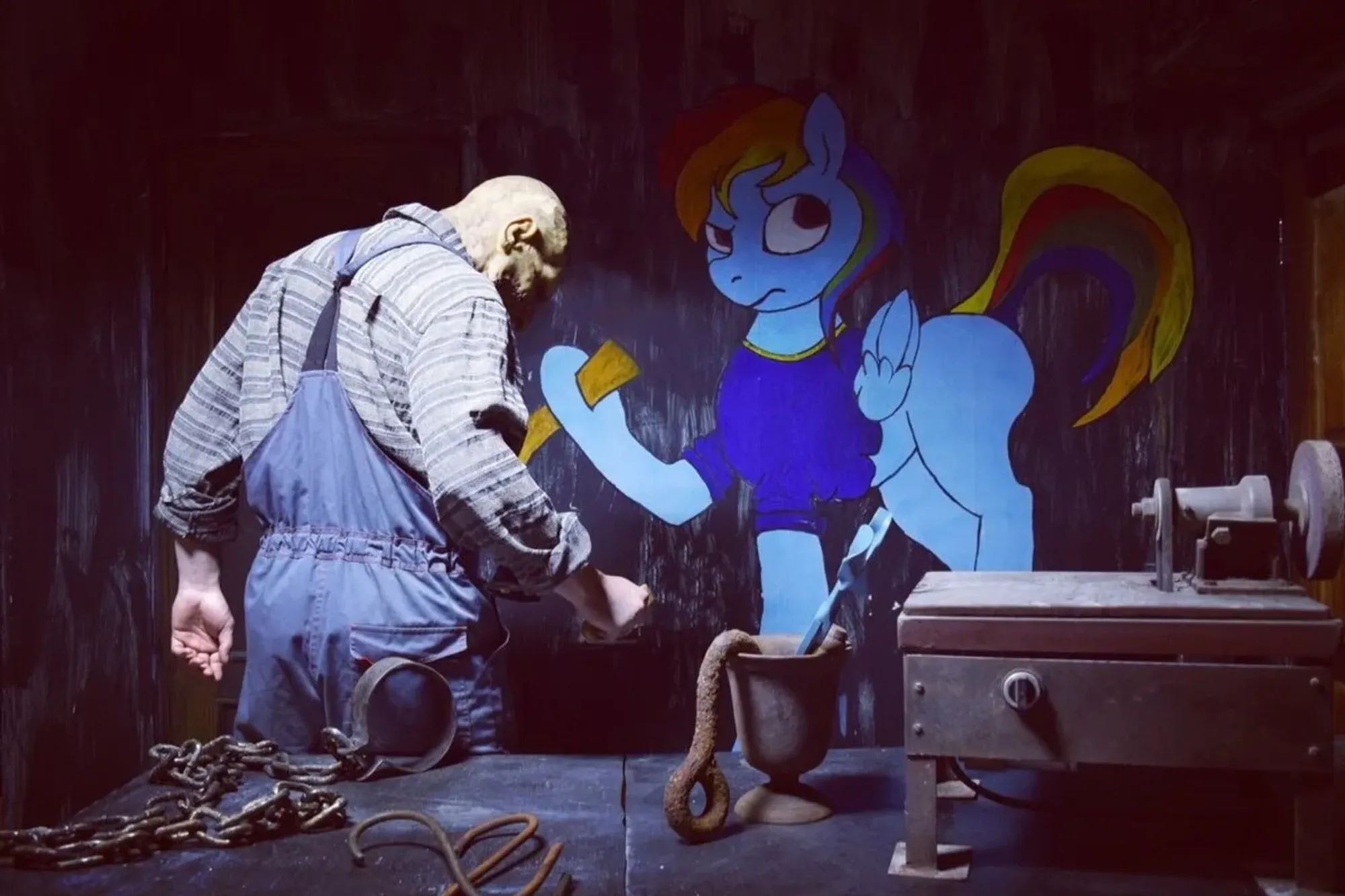
Rainbow pony
- Live actors
- 2–7Players
- 60 minutesTime
- Easy. A few easy tasks. Good for a first visit.Difficulty
- Scary. Actors, sudden appearances, psychological pressure.Scariness
About the escape room
One day, you receive a message asking for help from an unknown number. You rush into the very heart of the maniac's den to save the sender, but unexpectedly find yourself trapped. Age restrictions: 18+
Important information and features of the escape room
Без звонка администратора и внесения предоплаты бронирование игры не подтверждается.
The owner of this escape room has not yet confirmed their details.
If you are the owner of this escape room, please confirm your details so that customers can see your contact information for bookings.Location
Остановка «Агроуниверситет»
Services are provided by Никитина Ю.С.
Paid Parking
Wifi
Wardrobe
Waiting Area
AI Overview
AIMost praise goes to the actors, the maniac’s lair atmosphere, and full immersion—fear holds from the first scene. The space is large with many rooms, so there’s room to run and places to hide. Puzzles are mostly logical and mid-difficulty, but take longer under adrenaline. Contact and fear are tuned flexibly, though some complain about too many hints and either not enough or, conversely, excessive contact on certain shifts.
WeaknessesOn rare days, people note formulaic actions and 'screaming instead of acting.' Hard can feel 'painful rather than scary,' with reports of bruises and scrapes. Some missed puzzles, others felt there were too many hints; big teams get less attention and contact.
StrengthsPowerful acting and lively interaction, especially with two or three actors. Detailed set design; sound and lighting build tension well. The action–puzzle balance keeps the pace, and immersion is almost like a good horror film.
SecurityBefore the start, you get clear briefing and they ask about contact boundaries; the level can be changed on the go. Contact is at times rough and active: comfy clothes and knee protection help; props are safe but look very convincing.
Level of fearIt’s 18+ and really scary: newcomers often ask to simplify the mode or leave early. Not for kids or the sensitive, but you can drop the level to light.
Actors' gameActors are the main plus: the maniac and the 'daughter' are vivid, adapting to preferences and contact level. With two or three actors, there’s noticeably more dynamics and personal attention.
Quality of riddlesTasks are mostly fair and logical, solvable even under pressure, without any hardcore 'olympiad' difficulty. There’s stealth and searching; hints come on request. Sometimes people complain about too much running and simplicity or excessive hints.
PlotLore-wise, you answer a call for help and end up in a maniac’s lair, where you become the prey. Then it’s about surviving, rescuing, and escaping—with no mysticism, but nerves on edge.
Difficulty levelLight is great for beginners, Medium for those who want it stronger, and Hard for fans of dense contact and high intensity. Big teams find puzzles easier, but emotions hit harder with 2–4 players.
Other escape rooms at this location
Rainbow pony2 - 7 people
Escape rooms in Chelyabinsk by category
Pick a vibe — every category is a real page with reviews and booking.
Reviews