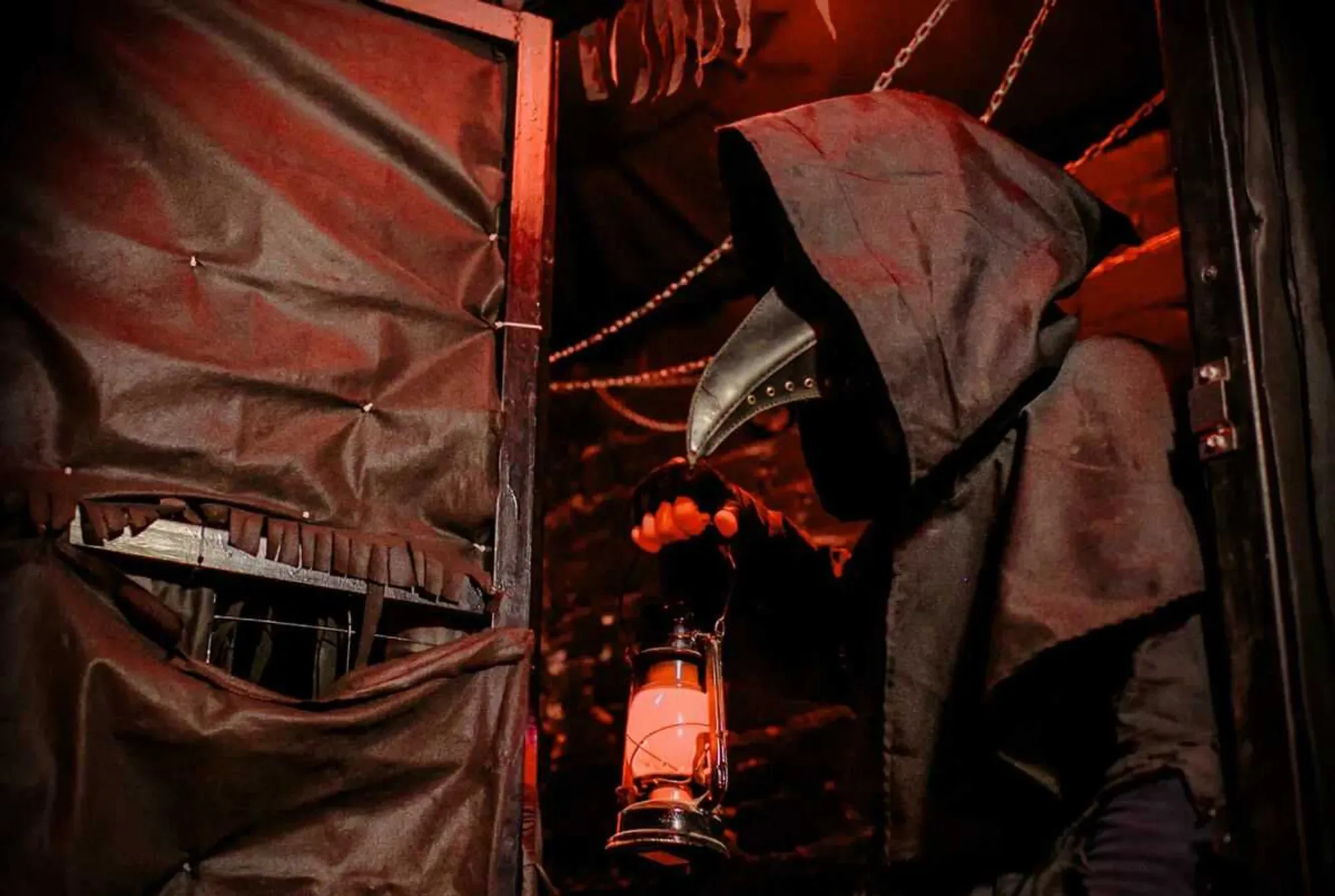
The Plague Doctor's Trap
- Instant booking
- Live actors
- 2–10Players
- 90 minutesTime
- Above average. More puzzles and a faster pace. Tight for beginners.Difficulty
- Scary. Actors, sudden appearances, psychological pressure.Scariness
Once upon a time, a family lived on the edge of a river. The father worked as a plague doctor, and he had a lovely wife and three daughters. Fate had it that the plague abruptly took the lives of his wife and children. Unable to cope with their loss, the doctor decided to use occult rituals to bring his family back to life. He moved to a dark dungeon where, after many years, a terrible evil made him lose his mind. Now he needs a sacrifice, a lifeless vessel in which he could place the souls of his deceased children and wife.
Will you be able to escape from here before you become his victims?
Для подтверждения бронирования требуется внести предоплату в размере 1000 рублей. Предоплата возвращается при отмене бронирования не позднее чем за 2 суток до игры, а также сохраняется до следующего визита в случае переноса игры.
Online booking
The owner of this escape room has not yet confirmed their details.
If you are the owner of this escape room, please confirm your details so that customers can see your contact information for bookings.Location
AI Overview
Escape rooms in Volgograd by category
Pick a vibe — every category is a real page with reviews and booking.
Reviews