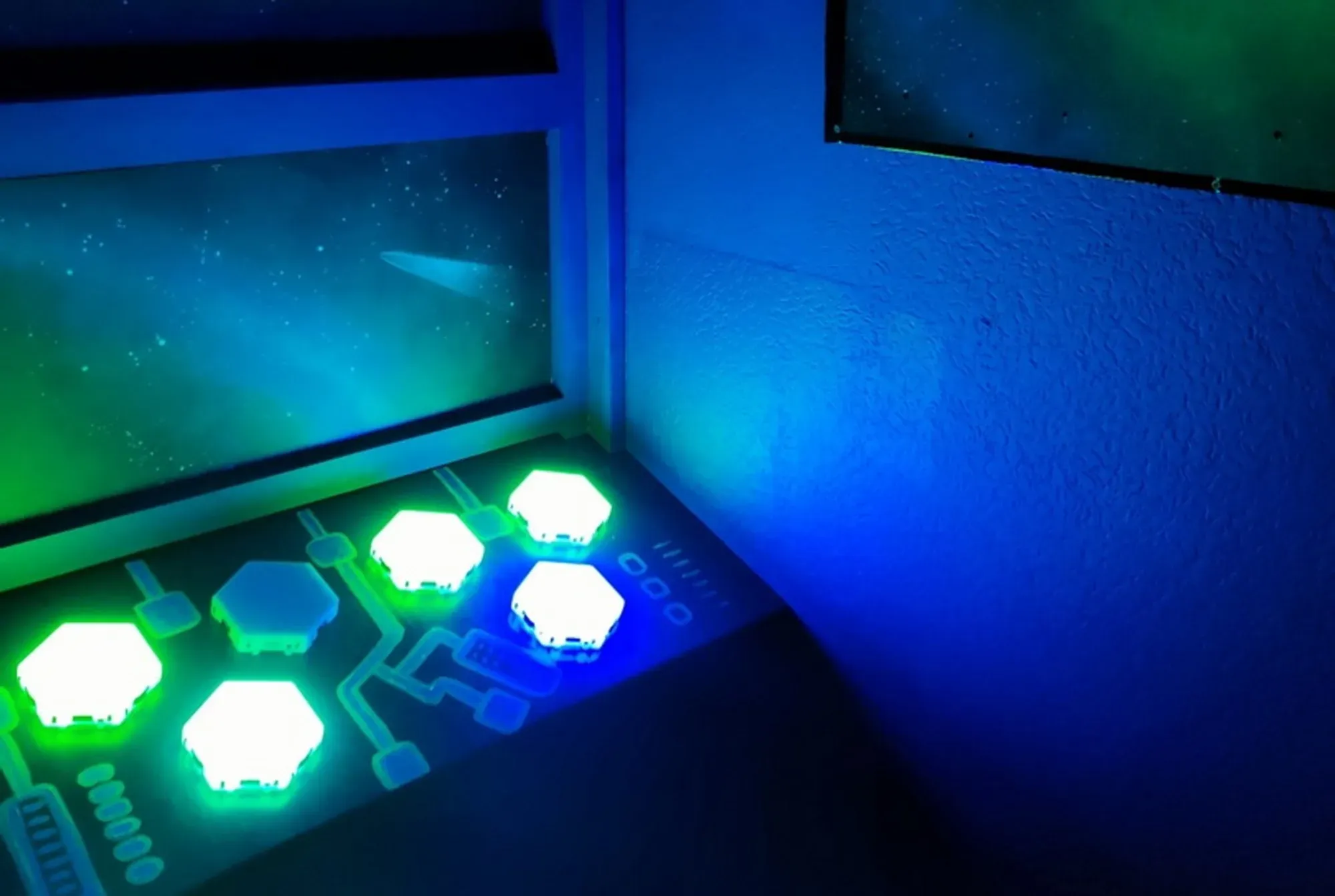
Among Us
- Instant booking
- 6–12Players
- 60 minutesTime
- Without riddles. Story and atmosphere, almost no puzzles.Difficulty
- Not scary. Almost no tension.Scariness
Attention! This format is not a classical real-life quest. In each round, players are randomly divided into “Crew Members” and “Traitors”. Participants do not know each other's roles. The crew's task is to complete tasks and identify the traitor, who, in turn, must eliminate the others before being exposed. The traitor can sabotage and eliminate others by touch. When a crew member discovers a neutralized character or has suspicions, he calls an emergency meeting. At this meeting, players share their guesses, observations, and conduct a vote. Players go through as many rounds as they can in the allotted time. Age restrictions: 8-12
Для подтверждения бронирования требуется предоплата в размере 1000 рублей.
Online booking
The owner of this escape room has not yet confirmed their details.
If you are the owner of this escape room, please confirm your details so that customers can see your contact information for bookings.Location
AI Overview
Escape rooms in Tomsk by category
Pick a vibe — every category is a real page with reviews and booking.
Reviews