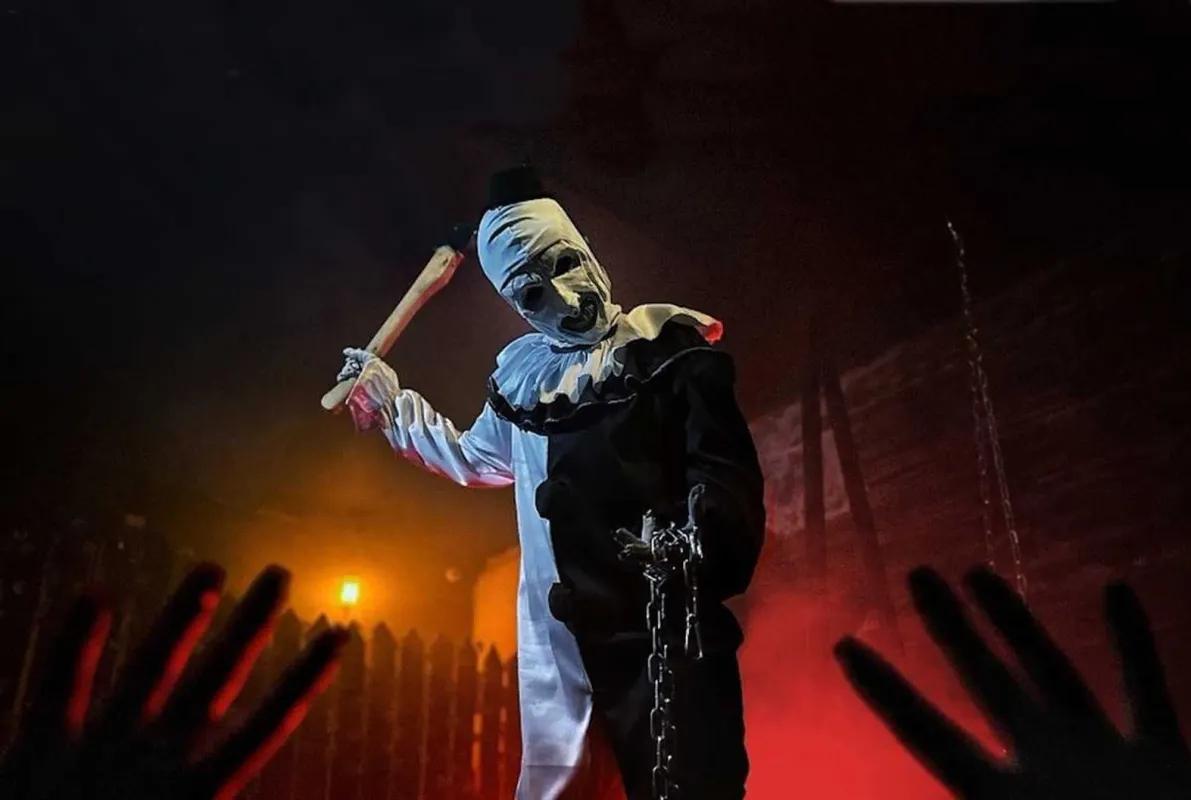
Terrifying
- 911 Operator, what's your emergency?
- They... they killed them all, it started as a tour, then this clown and this white girl and... I beg you... there's blood everywhere here...
- You're breaking up, could you repeat what your problem is?
- He... he's waving at me and... and smiling.
- Give me your address, I'll send help.
- ...
- Miss? Please respond, can you hear me?
- ...
Our time
An anonymous message with an invitation has arrived in your mail. It seems like an invitation to that very museum, which is dedicated to the clown Art from the movie "Horrifying"! You, horror enthusiasts, couldn't resist such a tour!
Требуется обязательная предоплата в размере 1000 рублей на все сеансы.
The owner of this escape room has not yet confirmed their details.
If you are the owner of this escape room, please confirm your details so that customers can see your contact information for bookings.Location
AI Overview
Escape rooms in Saratov by category
Pick a vibe — every category is a real page with reviews and booking.
Reviews