Escape room 8+
Sherlock Holmes
- Instant booking
- 2–8Players
- 60 minutesTime
- Medium. Logic and teamwork. No special experience needed.Difficulty
- Not scary. Almost no tension.Scariness
About the escape room
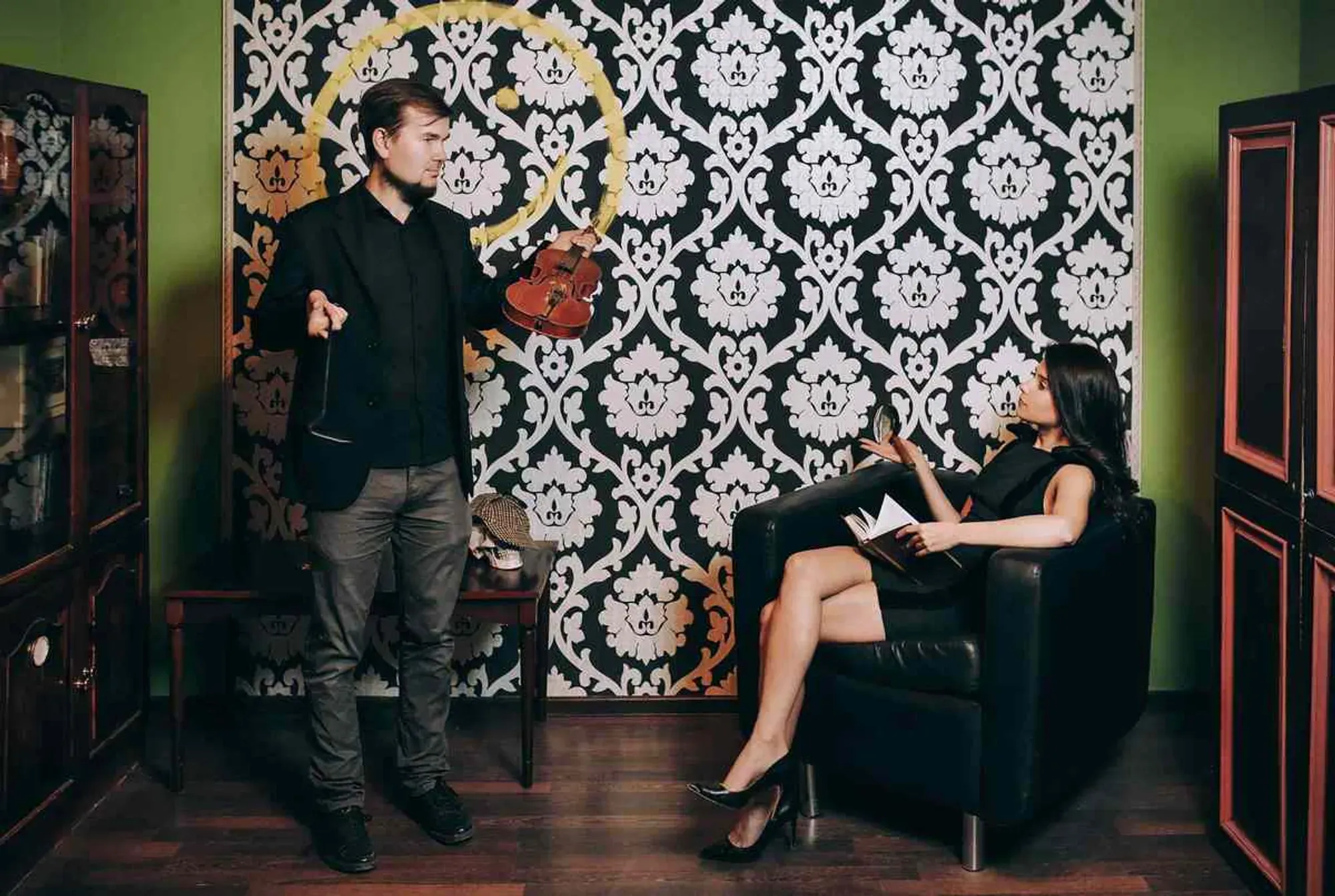
"Irregular parts" are the invisible detectives' spies on the streets of London, helping him track someone or find the necessary clues. To assemble a worthy team, he turned his room into a testing place for logical attention, search, and deduction. And after 60 minutes, you will find out whether you get into the team of invisible spies or not.
Online booking
The owner of this escape room has not yet confirmed their details.
If you are the owner of this escape room, please confirm your details so that customers can see your contact information for bookings.Location
Вход с Буденновского через арку возле кафе Sumo
Services are provided by ИП Михайленко Д.В.
Paid Parking
Wardrobe
Waiting Area
AI Overview
AIMost often praised are the logical, varied tasks, the cozy Holmes apartment setting, and the careful hints from the hosts. The quest is linear, so it’s more comfortable to play as a pair or trio; they note secret passages, unusual mechanisms, and a striking finale. Newcomers handle it with hints and are thrilled, while veterans get a good warm‑up, though sometimes without the “wow‑scale.” Occasionally they mention tired props, rare mechanism jams, a low number of rooms, and a slightly overpriced tag.
WeaknessesSome miss the sense of scale: little movement, the quest is linear, at points only two or three zones. There are occasional technical hiccups and comments about worn props, and they’d also like background music and a friendlier price.
StrengthsPuzzles are fair and detective‑precise, with a good balance of searching and logic. The BBC Sherlock‑style setting, neat technical touches, and secret passages keep interest to the end.
SecurityBefore the start they give a clear briefing and rules, including “an item is used once.” Overall safe, but don’t climb on furniture or pull the decor; they occasionally mentioned an unstable mirror or the risk of falling off a chair—attentiveness solves it.
Level of fearNot scary at all: no actors or jump scares, suitable for families and kids about 10–11. Detective atmosphere; at most, mild tension from hideaways and lasers.
Actors' gameNo acting; interaction goes through the host. Administrators like Sergey and Lena are polite, give clear instructions, and hint delicately without breaking the solving fun.
Quality of riddlesPuzzles are logical and transparently tied to the plot, with no absurd associations. There’s searching and mechanics with electronics, unusual locks, and tasks for team coordination. Some typical tasks appear, but there are plenty of fresh ideas.
PlotYou, as candidates for the “Irregulars,” undergo Holmes’s trial, progressing through clues and the apartment’s hideaways. The story is simple but keeps the pace and leads nicely to a finale without spoilers.
Difficulty levelMedium difficulty: newcomers should take hints and listen carefully to the briefing. Experienced players will be interested, though don’t expect super‑hard knots or a huge number of rooms; optimal group is 2–4 players.
Other escape rooms at this location
Sherlock Holmes2 - 8 people
Escape rooms in Rostov-on-Don by category
Pick a vibe — every category is a real page with reviews and booking.
Reviews