Escape room 18+
Mission impossible
- Verified
- Instant booking
- 2–7Players
- 60 minutesTime
- Above average. More puzzles and a faster pace. Tight for beginners.Difficulty
- Not scary. Almost no tension.Scariness
- from 3 450 руб.Price
About the escape room
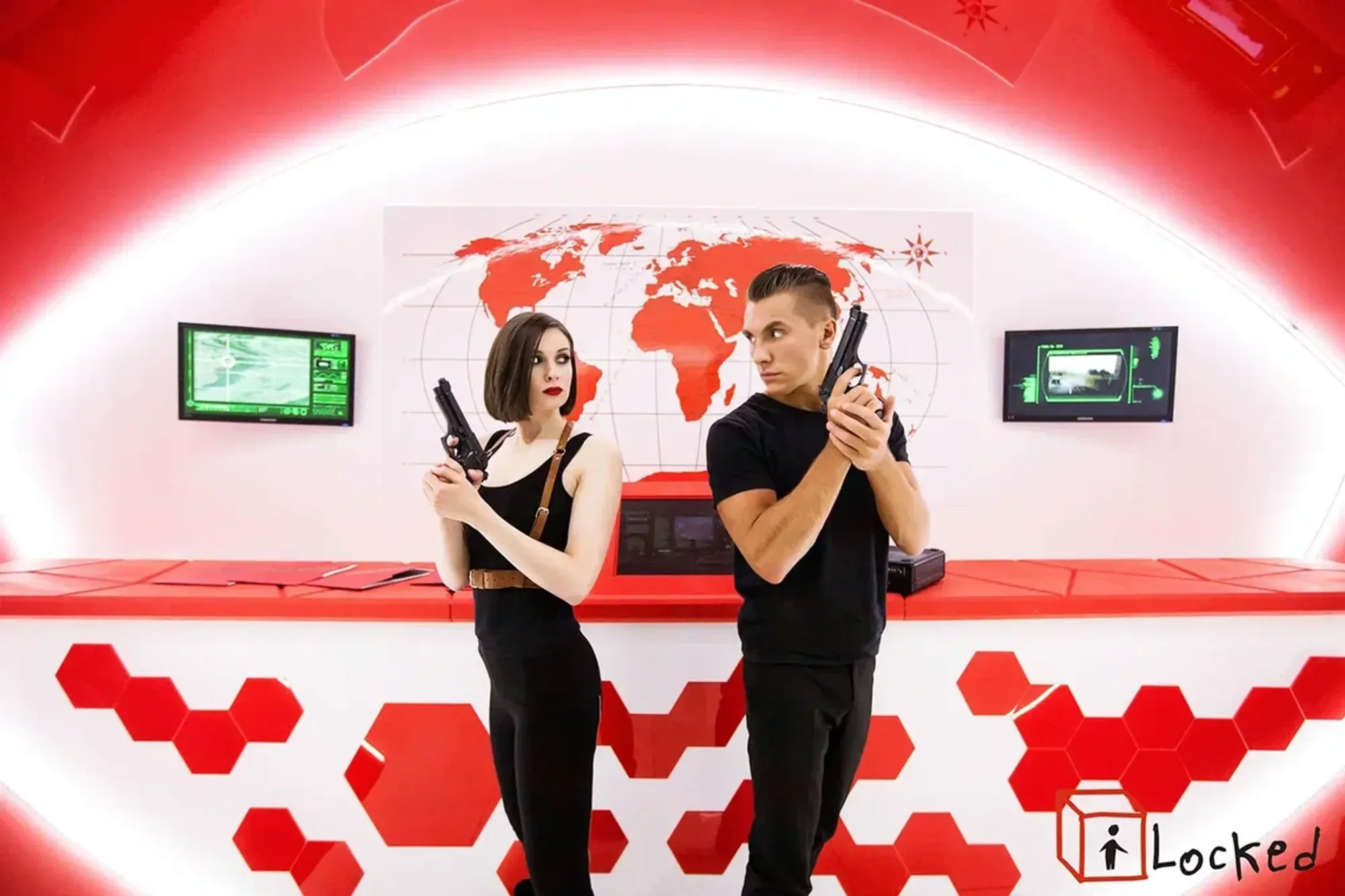
You are CIA agents. Your goal is to save the world from the terrorist organization Gorgona. Be on guard, possibly one of you has been recruited by the enemy. The quest has 3 different endings.
Important information and features of the escape room
Фото и видео с квеста:
После прохождения квеста мы снимем ваш отзыв и сделаем несколько снимков с вами в нашей фото-зоне!
Фото и отзыв выкладываются в течении суток в группу ВКонтакте https://vk.com/mesto124
Бесконтактный квест
Online booking
Location
130 метров от остановки «Улица Авиаторов», со стороны улицы Молокова
Services are provided by ИП Першин М.А. (246413138549)
Paid Parking
Wifi
Wardrobe
Waiting Area
AI Overview
AIGuests most often praise the ambience, the unusual opening, and the administrators who gently guide. Difficulty is medium: newcomers finish with hints, experienced teams go faster. Recurring complaints about the tech and repetitive actions in the second area, and that there are only two rooms so big groups feel cramped. Multiple ending options are noted — this really makes the quest stand out.
WeaknessesSometimes the equipment and mechanisms act up, which breaks the pace. In the second area some actions feel repetitive, and there are only two locations — big teams have nowhere to spread out. There were complaints about no change given when paying.
StrengthsThe start grabs you at the threshold and instantly sets a spy mood; atmosphere and music stay on point throughout. Puzzles are mostly logical, emphasizing interaction and links between stages. The variable finale adds excitement and reasons to return.
SecurityThe briefing is clear; the game is closely monitored and they help if the tech misbehaves. No physical overload; the start with hoods over the head is safe but may slightly surprise.
Level of fearNo jump scares; at most slightly tense at the very beginning due to the entrance setup and darkness. Suitable for children and families, ideally 10–12 years old with adult supervision.
Actors' gameNo in-room acting, but operators and administrators are always in touch, joke, support, and give precise hints. Anastasia and Maxim are often thanked for unobtrusive hosting.
Quality of riddlesPuzzles are diverse and generally fair, with many tasks focused on cooperation and observation. Occasionally there are contentious elements like a “decoder” and repeated data inputs. Difficulty-wise, moderately challenging but solvable within an hour with rare hints.
PlotYou are agents opposing “Gorgon,” and along the way you make decisions that change the ending. The story keeps a spy-thriller tone with a strong setup and no spoilers.
Difficulty levelMedium difficulty: newcomers should take hints and go as a team of 3–4; experienced players will find it comfortable and dynamic. In larger groups, some players stand idle.
Other escape rooms at this location
From 3 450 руб.2 - 7 people
Escape rooms in Krasnoyarsk by category
Pick a vibe — every category is a real page with reviews and booking.
Reviews