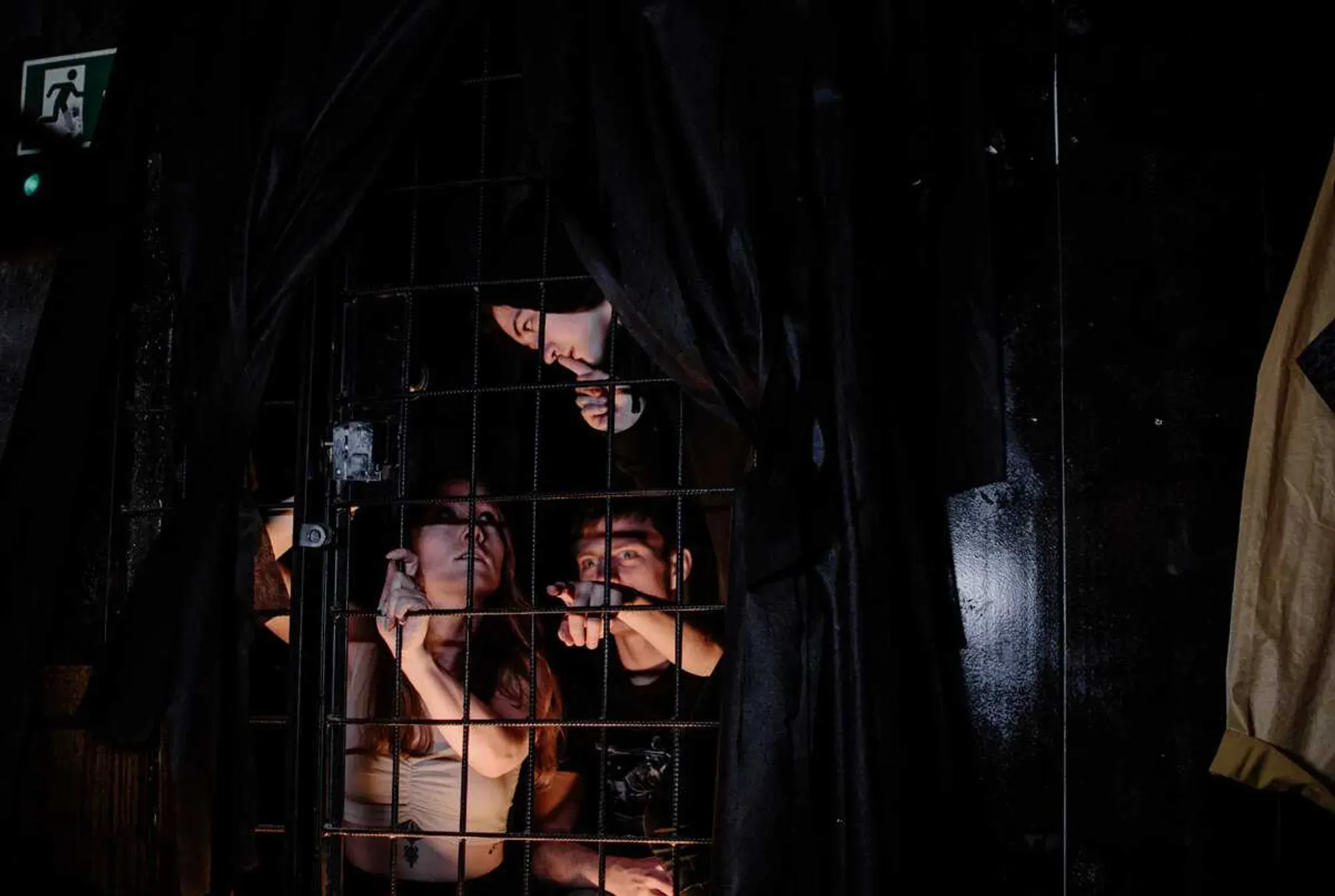
Don't breathe
- Live actors
- 2–8Players
- 60 minutesTime
- Medium. Logic and teamwork. No special experience needed.Difficulty
- Scary. Actors, sudden appearances, psychological pressure.Scariness
You are a group of friends, consisting of experienced robbers and a prepared accomplice, deciding to commit a robbery that seems the simplest to you - to break into the house of a lone blind military man to steal hidden money. However, once inside, you quickly realize that the blind owner is not as defenseless as you thought. A man named Victor turns out to be not only incredibly cunning and resourceful, but also possessing a secret past related to his family and military buddy, and he is not averse to telling the robbers these memories. With each step you realize that you have fallen not only into the trap of your own ambitions, but also into a tangled web of lies and betrayal. Having learned the real truth, will you be able to make the right choice?
Требуется обязательная предоплата в размере 1000 рублей.
The owner of this escape room has not yet confirmed their details.
If you are the owner of this escape room, please confirm your details so that customers can see your contact information for bookings.Location
AI Overview
Escape rooms in Yekaterinburg by category
Pick a vibe — every category is a real page with reviews and booking.
Reviews