Performance 14+
Butcher's shop
- Live actors
- 2–8Players
- 60 minutesTime
- Medium. Logic and teamwork. No special experience needed.Difficulty
- Scary. Actors, sudden appearances, psychological pressure.Scariness
About the escape room
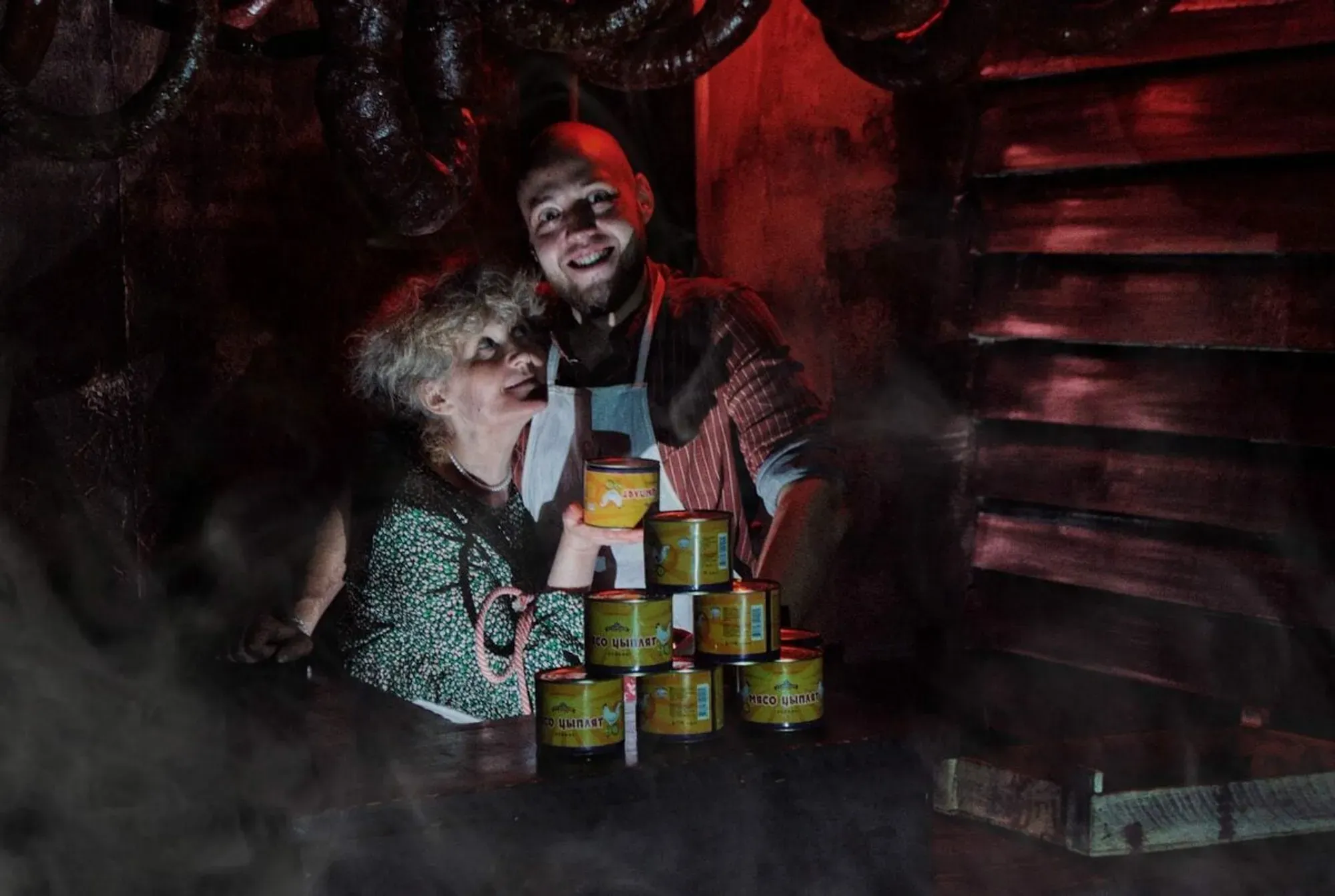
In the provincial town of Heidenheim, there is an unremarkable butcher shop. Whether by chance or not, whenever people go missing in the town, the assortment in this shop gets updated.
Isn't that strange?
Important information and features of the escape room
Для подтверждения бронирования требуется предоплата в размере 900 рублей.
The owner of this escape room has not yet confirmed their details.
If you are the owner of this escape room, please confirm your details so that customers can see your contact information for bookings.Location
Недалеко от ТЦ «Гринвич»
Services are provided by ООО Уайт Стар
Free Parking
Wardrobe
Waiting Area
AI Overview
AIMost guests rave about the actors and ambiance, often choose “hard” or add a second actor for more dynamism. Contact is flexibly adjusted, sometimes even per player, but impressions depend on the shift. There are complaints about weak or illogical puzzles, choppy light-and-sound, and organizational slip-ups. Sessions can run shorter than advertised, and contact is reduced with teens.
WeaknessesPuzzles are sometimes simple, repetitive, or illogical; some players expect more from the quest component. Technical and organizational hiccups occur: jittery music, sticking doors, rescheduled/canceled bookings, and time-trimmed sessions. For some teams the fear didn’t land—the “running around” felt dull.
StrengthsStrong acting with powerful improvisation; atmospheric sets and sound keep you on edge. Lots of interaction, individual scenes, and the option to buy a second actor. Friendly admins, photos after the game, and the feeling of a full-on show.
SecurityRules are explained and a waiver is signed before the start; you can personalize contact. Contact can be rough: you may be carried, grabbed by the hair, splashed with water, and props may be used loudly—safe words help, but minor bruises and scares are not uncommon.
Level of fearFear level ranges from moderate to hard, but you can set contact to your preference. Teens often face restrictions, so “hard” may be unavailable and emotions lower.
Actors' gameActors are the main trump card: Max, Mikhail, Dmitry, Nikita, Alisa, and others often get special thanks for a crisp balance of fear and humor. Contact is varied, safe words are respected, and one-on-ones plus improvisation are the cherry on top.
Quality of riddlesPuzzle feedback is mixed: some find them sufficient and like the variety, others criticize illogic and too many key hunts. It’s more a performance with puzzles than a “pure” quest. Experienced quest fans may find the tasks too few.
PlotA story about an unremarkable shop and mysterious disappearances is delivered through scenes and interactions with the butcher. The narrative is more background; the emphasis is on immersion and performance.
Difficulty levelDifficulty ranges from easy to medium: comfy for newcomers, simpler for veterans, but with more action. Hints are given promptly, and the pace is high.
Other escape rooms at this location
Butcher's shop2 - 8 people
Escape rooms in Yekaterinburg by category
Pick a vibe — every category is a real page with reviews and booking.
Reviews