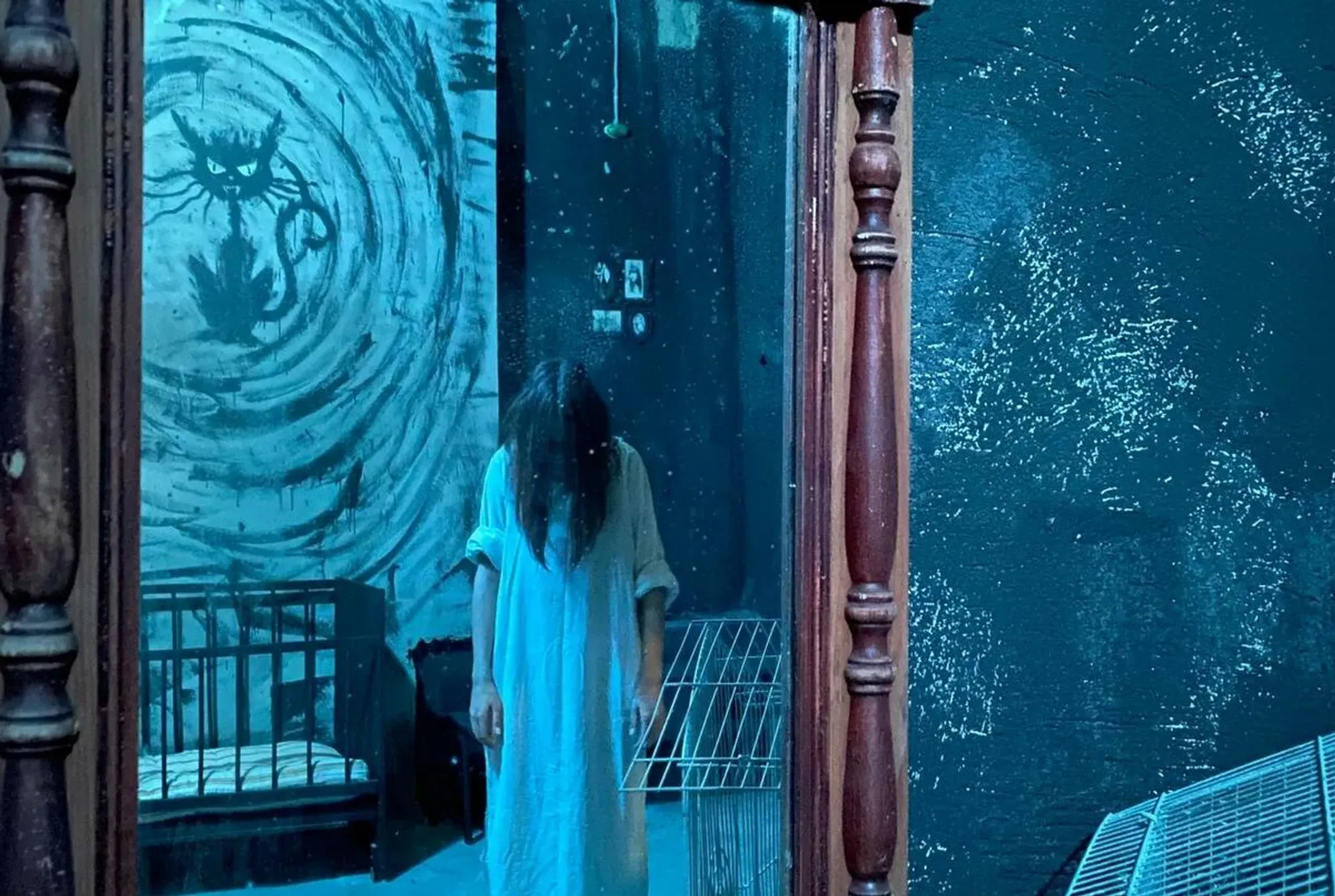
Insomnia
- Instant booking
- Live actors
- 2–12Players
- 90 minutesTime
- Medium. Logic and teamwork. No special experience needed.Difficulty
- Not scary. Almost no tension.Scariness
During scientific research in the field of insomnia, subjects describe themselves in a state between sleep, madness, and death, i.e., in a state of limbo. We decided to study this phenomenon. As a platform for research, we chose a house which, as it turned out, has not the most successful history. To date, we have found out one thing - from the first minutes of being there, they experience mental disorders. Minute by minute, fatigue turns off their consciousness, leading them into limbo. There, the subjects meet a certain woman, presumably the owner of the house, forever stuck in one time of her life. What is this? Hallucinations or are they entering the afterlife? There is no answer, and this is what we have to find out.
Для подтверждения бронирования требуется предоплата в размере 500 рублей.
Online booking
The owner of this escape room has not yet confirmed their details.
If you are the owner of this escape room, please confirm your details so that customers can see your contact information for bookings.Location
AI Overview
Escape rooms in Cheboksary by category
Pick a vibe — every category is a real page with reviews and booking.
Reviews